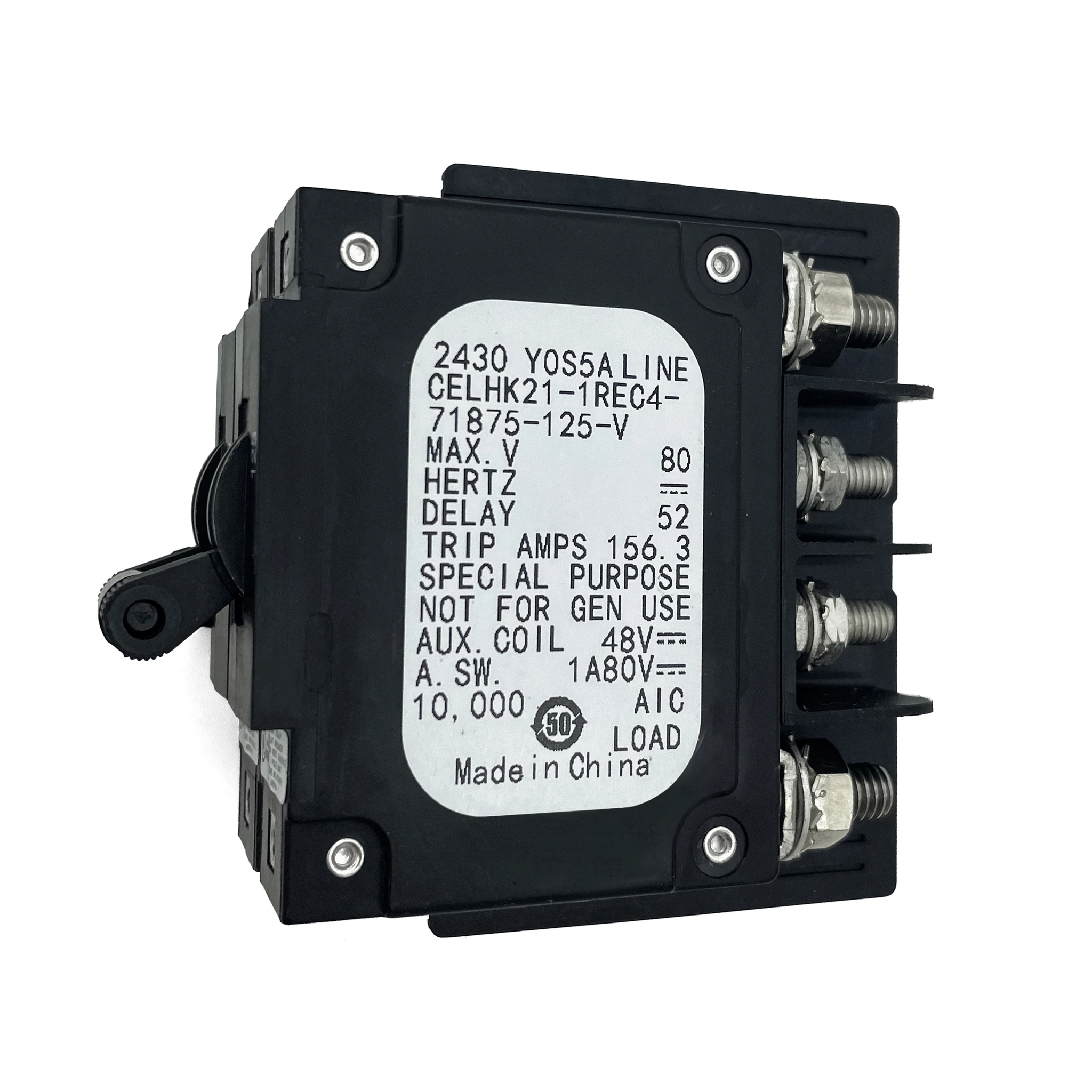
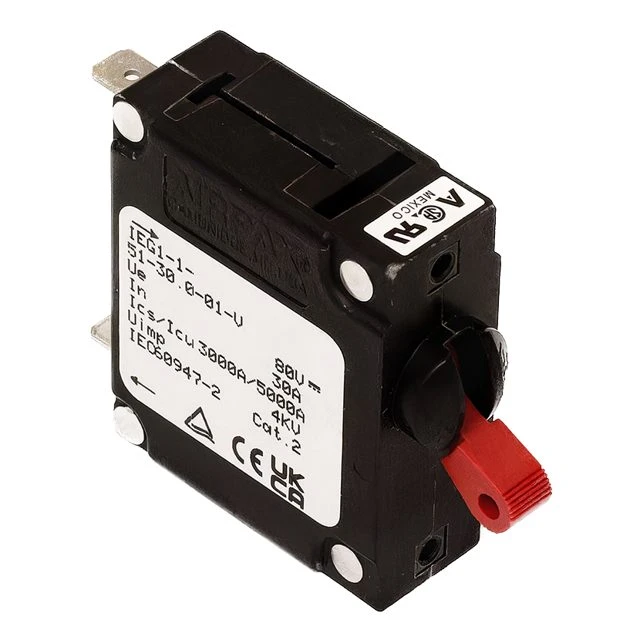
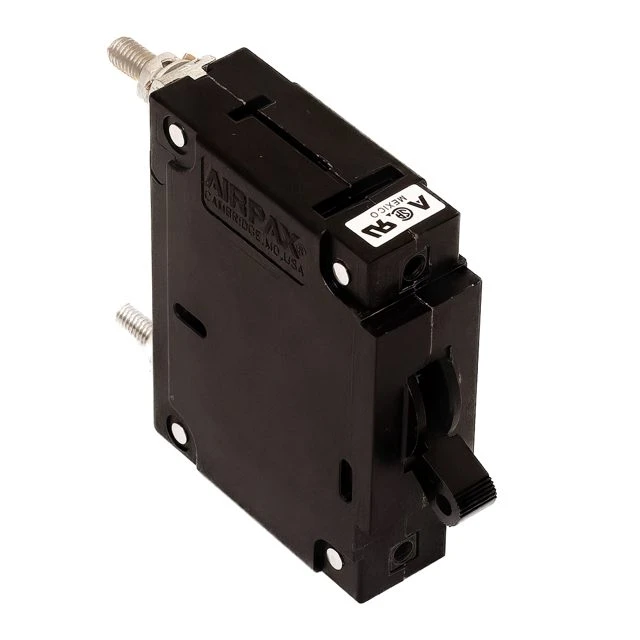
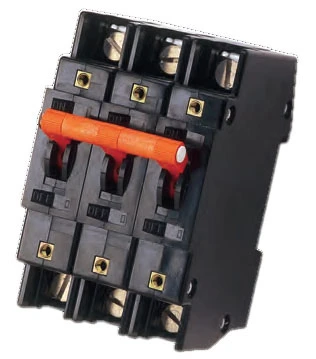
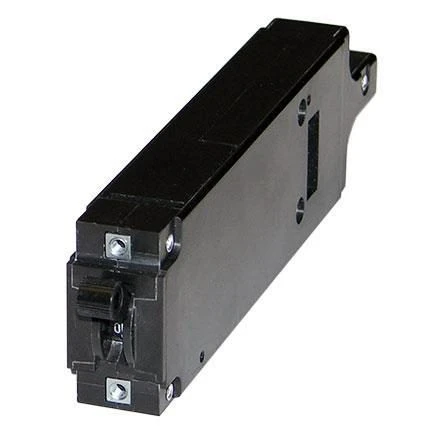
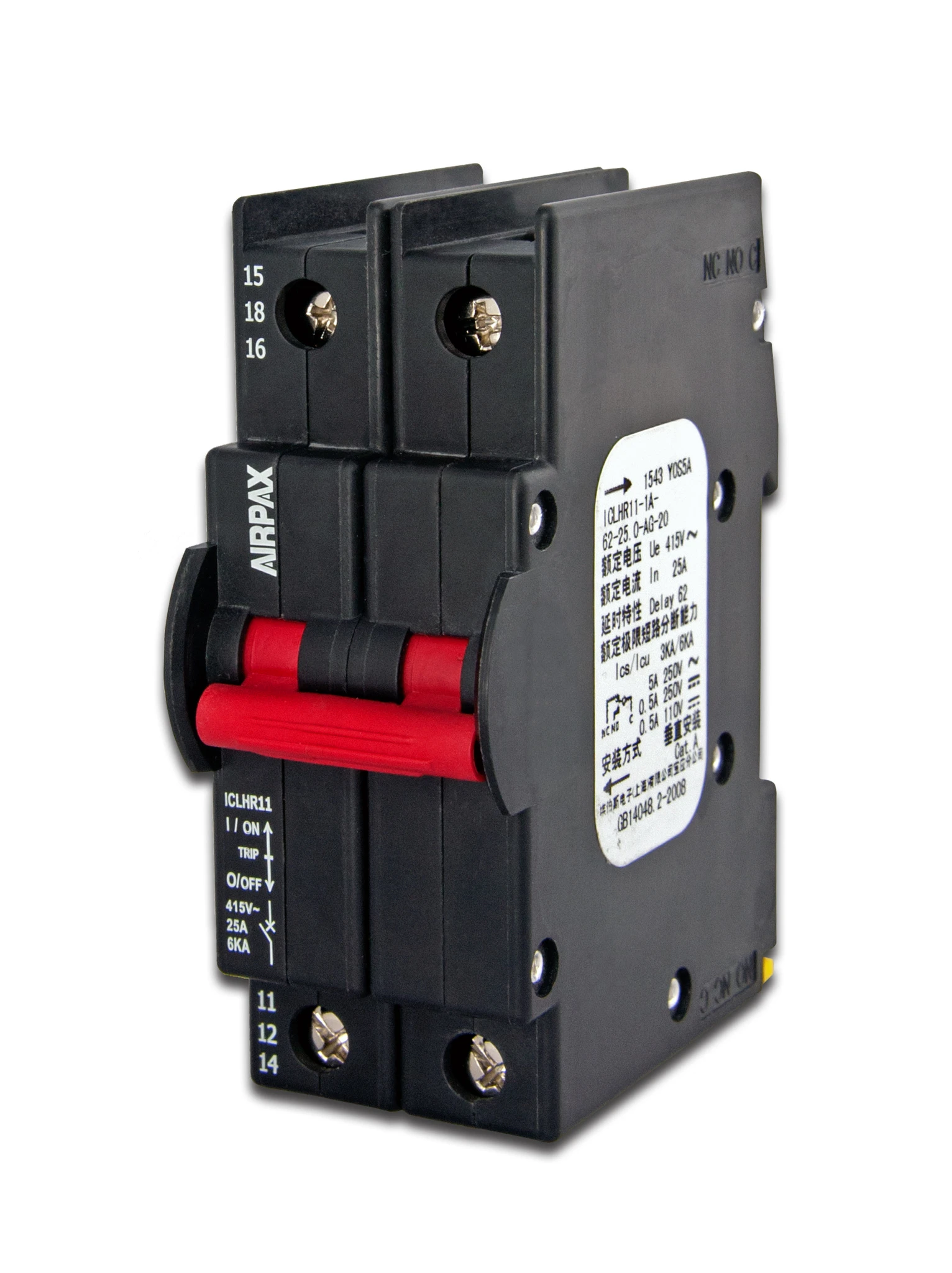
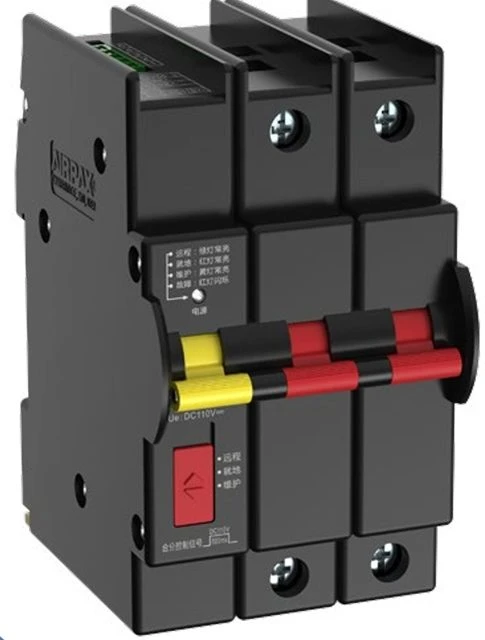
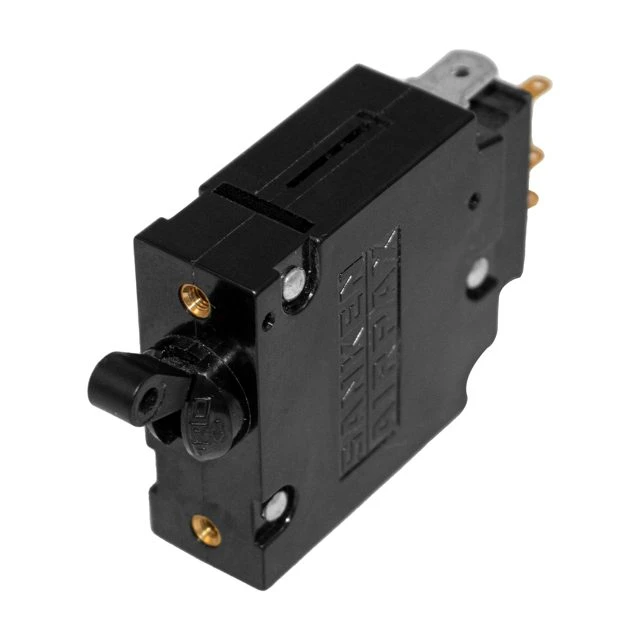
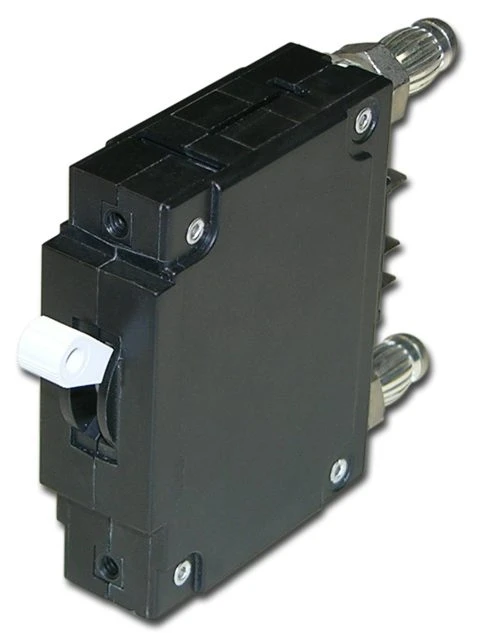
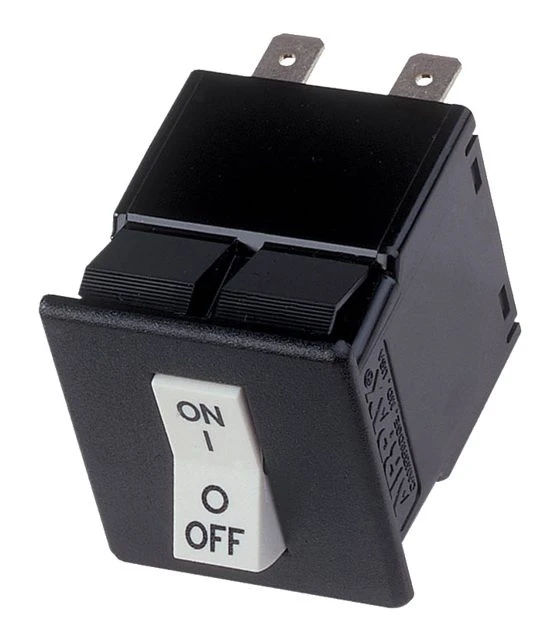
Supplementary protectors (US market).
The standard covers supplementary protectors intended for overcurrent, overvoltage or undervoltage protection inside appliances or other electrical equipment where branch-circuit overcurrent protection already exists or is not required.
It also covers accessories such as alarm and auxiliary contacts. It does not cover automatic-reset devices or devices requiring complete loss of voltage for manual restart (UL 244A, UL 60730-1). UL classifies these products as “supplementary protectors”; the term “circuit breaker” in their datasheets is colloquial.
A product to UL 1077 receives the UL Recognized Component mark and may be used only as a built-in component in end equipment in which branch-circuit protection is provided by a separate UL 489 breaker or fuse.
A UL 1077 protector does not replace a branch-circuit breaker under the NEC and cannot be installed as a stand-alone device; suitability for a specific application is assessed during end-product certification under Conditions of Acceptability.
In the EU, the mark has no formal regulatory significance and does not replace assessment to IEC/EN 60947-2 or EN 60898-1.
The standard requires calibration, overload, endurance and short-circuit tests, with parameters depending on manufacturer declarations and application type: overload test at 1.5 × In for general use or 6 × In for motor starting.
Short-circuit testing follows Table 25.1: for each connection arrangement (A–J, selected according to number of poles, rated voltage and single- or multi-phase use), an opening operation O and two close-open operations CO are performed, separately for individual poles and common operations.
The product must safely interrupt the short circuit at least once without a fire hazard and need not remain functional after the test (contact welding and inability to reset may be permitted), unless the manufacturer declares “fit for further use” after a three-operation short-circuit test.
Protectors marked as appliance protectors are tested at the short-circuit current from Table 25.2 assigned to motor horsepower and rated voltage. Insulation clearances are 3/8 inch through air and 1/2 inch over surface.
Approval is UL Recognized Component (reversed “R” and “U” mark) with Conditions of Acceptability in the UL file; the end-product manufacturer checks them in UL Product iQ.
Check whether the product is UL Recognized (UL 1077), the UL file number, the short-circuit current, voltage and upstream protection used in testing, and whether a UL 508A panel has separate UL 489 branch-circuit protection; do not use a UL 1077 protector as the sole protection for motors or transformers.