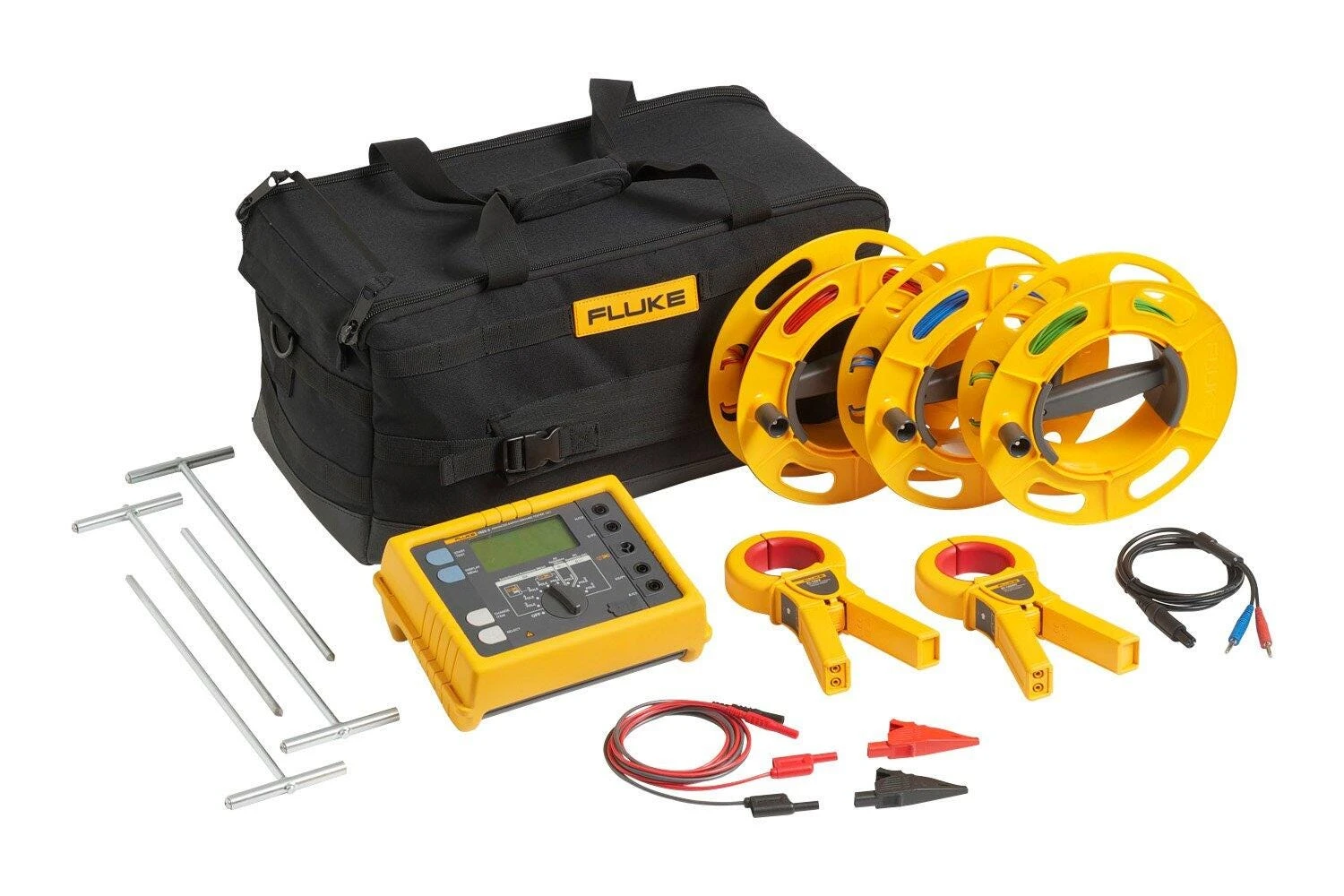
GEO earth ground resistance tester supporting all four standard methods: three- and four-pole fall-of-potential testing with auxiliary stakes, soil resistivity measurement, selective testing with one clamp and stakeless testing with two clamps. The kit contains stakes, cable reels, clamps and a carrying case.
Compared with simpler testers, it features automatic frequency control (AFC) to avoid interference and ground impedance measurement at a frequency close to mains frequency (R*), which better represents earth-fault conditions. The stakeless method measures the resistance of an individual earth electrode without disconnecting the earthing system or driving in stakes.
For railway applications, the tester checks the earthing of substations, overhead line support structures, trackside cabinets and signalling containers, where there may be insufficient room for auxiliary stakes (platforms, tunnels and paved areas). Measurements on earthing systems connected to the traction return circuit must account for interference currents indicated by the instrument.
Specifications (Fluke 1625-2, from the 1623-2/1625-2 datasheet):