UN Regulation No. 118 - flammability of materials used in category M3 bus interiors; material type approval.
The Regulation concerns the burning behaviour (ignitability, burning rate, melting behaviour) and fuel- or lubricant-repelling capability of materials used in category M3 class II and III vehicles (paragraph 1), namely buses carrying seated and standing passengers and coaches.
It has two parts: Part I - type approval of a vehicle with regard to the burning behaviour of materials used in the interior, engine compartment and separate heating compartments; Part II - type approval of a component (material/equipment). Tests are defined in the Annexes: 6 - horizontal burning rate (horizontally installed materials), 7 - melting behaviour (materials above seats and in the ceiling), 8 - vertical burning rate (vertically installed materials), 9 - fuel/lubricant repellency (engine-compartment insulation), 10 - resistance of electrical cables to flame.
The Regulation does not apply to rail vehicles; for rolling stock, material flammability is governed by EN 45545-2 as referenced by the TSIs.
Component (material) type approval under Part II of R118 means that samples of the material in the specified installation direction passed the Annex 6–10 tests at an authorized technical service and an approval authority assigned an approval number; the manufacturer places the approval mark (paragraph 4.5) on the packaging: E in a circle with the country number, “118R” with the Part II designation, installation-direction symbols (↔, ↕ or both), and the letter V for materials meeting the melting requirements.
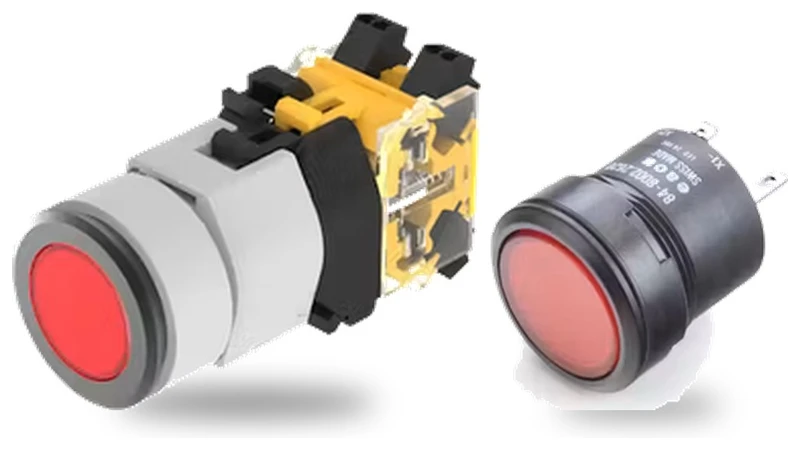
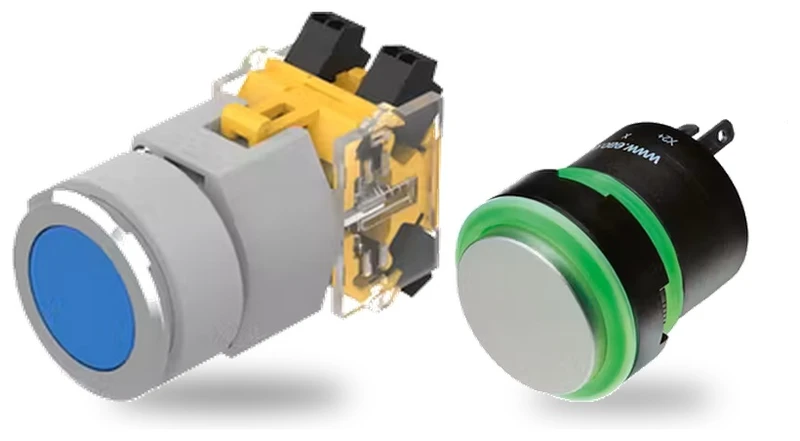
A statement of “R118 compliance” for a pushbutton enclosure, cable duct or wire concerns only the material's flammability in a category M3 bus and does not demonstrate compliance with EN 45545-2 or rolling-stock hazard levels (HL).
The procedure is type approval by the authority of a Contracting Party, with testing by a technical service and mutual recognition among the parties to the 1958 Agreement. Criteria in the consolidated text include: Annex 6 - burning rate not greater than 100 mm/min or flame extinction before the last measuring point; Annex 7 - dripping material does not ignite cotton wool; Annex 8 - vertical burning rate not greater than 100 mm/min or earlier extinction; Annex 9 - mass increase after 24 h immersion in fuel/lubricant below 1 g; Annex 10 - cable burning stops within 70 s and at least 50 mm of insulation remains unburned.
The Regulation permits, as an alternative route, testing to ISO 5658-2 (lateral flame spread in vertical configuration) with CFE of at least 20 kW/m² and cable testing to ISO 6722-1:2011. Material type approval does not replace vehicle type approval (Part I), which checks the installation of materials in the specific bus type.
Check the amendment-series number, the part (I vehicle / II component), the installation direction covered by the approval, and which Annex 6–10 tests were performed; for installation in rolling stock, separately require an EN 45545-2 report stating the HL class.