RoHS Directive - 10 restricted substances in electrical and electronic equipment.
The Directive restricts substances listed in Annex II in electrical and electronic equipment (EEE), meaning equipment that depends on electric currents or electromagnetic fields in order to work properly, with rated voltage up to 1000 V AC / 1500 V DC (Article 3(1)), including cables and spare parts (Article 4(1)).
The limits refer to concentration by weight in homogeneous materials (Article 4(2)): lead, mercury, hexavalent chromium, PBB, PBDE and the phthalates DEHP, BBP, DBP and DIBP at 0.1% each, and cadmium at 0.01%. Annex I divides EEE into 11 categories, including category 9 monitoring and control instruments (including industrial instruments) and category 11 other EEE.
Article 2(4) excludes, among other things, means of transport for persons or goods (except non-type-approved electric two-wheel vehicles), equipment specifically designed as part of other excluded equipment, large-scale stationary industrial tools, large-scale fixed installations and research-and-development equipment; the Commission FAQ states that means of transport also include trains.
An EU declaration by the manufacturer under 2011/65/EU for finished EEE (power supply, controller, meter) means that the manufacturer has demonstrated compliance with the limits in Annex II in all homogeneous materials, using any applicable exemptions in Annex III/IV, which should be identified.
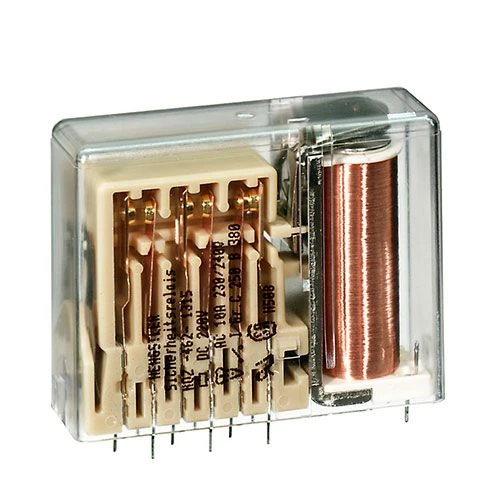
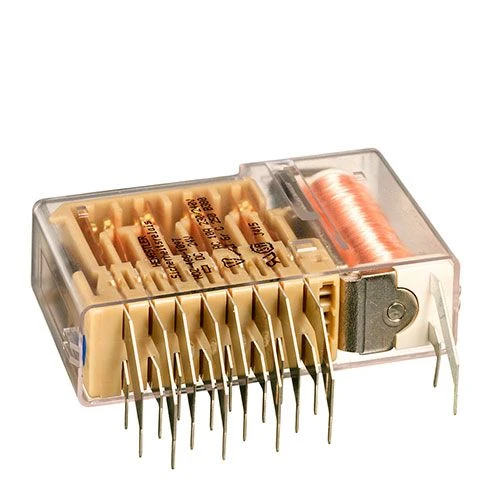
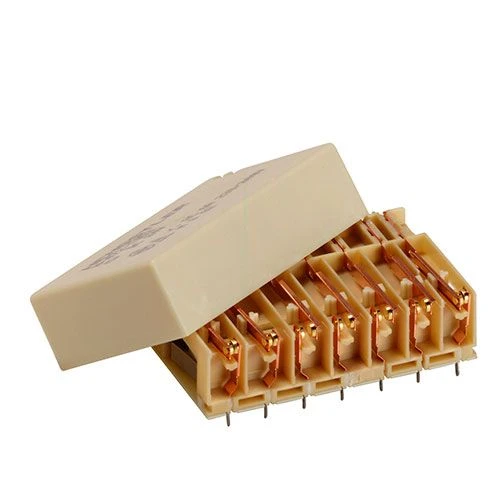
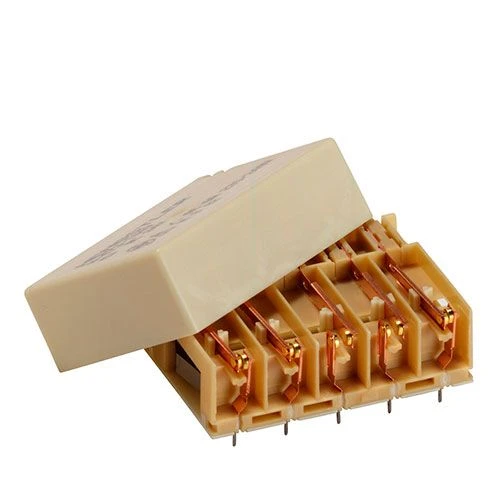
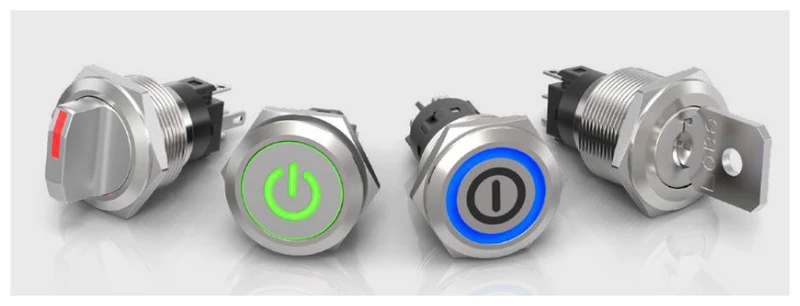
For a component sold separately (relay, switch, connector), the Commission FAQ (questions 7.3 and 8.5) states that CE-marking and EU-declaration obligations apply to finished EEE, while a subassembly intended for further integration does not require separate CE marking or a declaration; the component manufacturer therefore usually issues a material-compliance statement (“RoHS compliant”), which the integrator uses in its documentation.
RoHS compliance of a component does not change the status of a railway vehicle, which as a means of transport lies outside the Directive.
The EEE manufacturer prepares technical documentation and carries out internal production control according to module A in Annex II to Decision No 768/2008/EC (Article 7(b)), issues an EU declaration of conformity confirming compliance with Article 4 (Article 13), and affixes the CE marking to the product, packaging or documents (Article 15).
Materials, components and parts tested or assessed in accordance with harmonized standards benefit from a presumption of conformity (Article 16); harmonized standards for RoHS are published under Commission Implementing Decision (EU) 2020/659 of 15 May 2020 (EN IEC 63000 technical documentation).
Exemptions in Annexes III and IV are time-limited; an application for renewal must be submitted no later than 18 months before expiry, and a decision takes 18–24 months. Directive (EU) 2025/2456 transfers assessment of exemption applications and reviews of the substance list to the European Chemicals Agency (ECHA) and requires the substance list to be reviewed at least every 4 years.
Check whether the document is an EU declaration for finished EEE or a component material statement, which Annex III/IV exemptions the manufacturer uses (for example lead in alloys) and their expiry dates, and whether it covers the four phthalates added by Directive 2015/863.