Railway traffic control equipment is divided into station systems (relay and computer-based interlockings) and line systems (block systems, track-to-train equipment, remote control and level crossings). In a relay interlocking, relays are the main components, accompanied by transformers, resistors and rectifiers; critical buttons on the tile-type control panel are sealed or operation-counted, and an ammeter indicates the current drawn by point machines. In a computer-based interlocking, the field level consists of object controllers, concentrators and transmission loops installed in telecommunications cabinets, with an auxiliary control panel available in the event of a computer failure.
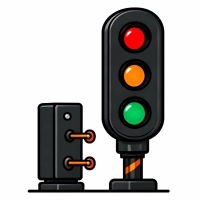
Requirements for telecommunications and IT systems at railway control posts are defined by PKP PLK instruction Ie-116: 230 V AC supply at −15/+10%, a 48 V DC battery with a grounded positive pole providing at least 8 hours of backup and a 10-year service life, equipment operating range of 43–57 V DC, redundant rack-mounted power supplies, MTBF of at least 10,000 h, 15 years of operation and service support, room temperature of +5…+35 °C (0…+45 °C at the limits), EMC immunity in accordance with PN-EN 50121-4 and PN-EN 61000-6-2, and surge protection at the distribution frame for all copper links. Signals are supplied from 230 V, stepped down to 110 V in the relay room and to 12 V in the signal head; the red aspect has a separate transformer, and lamp failure is monitored by a repeater on the control panel.
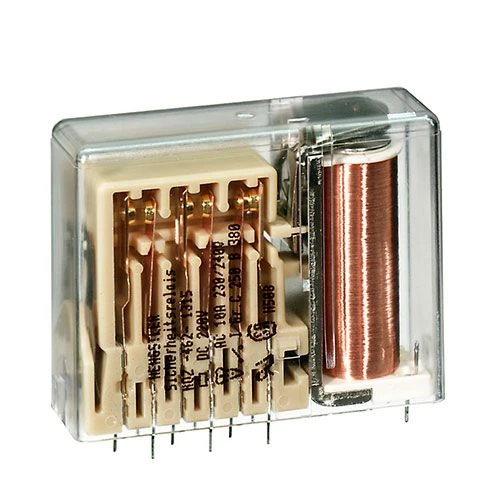
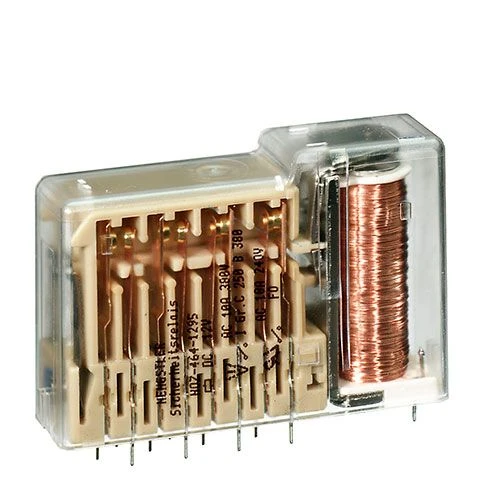
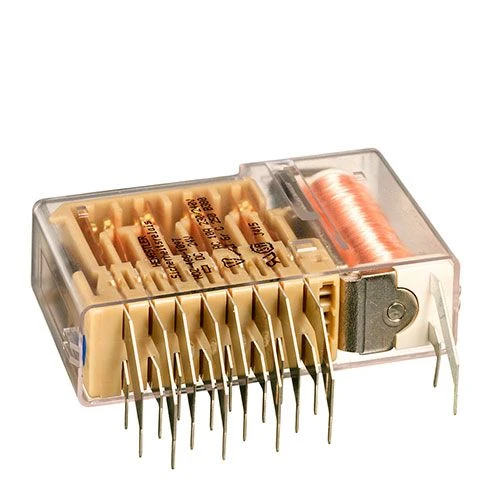
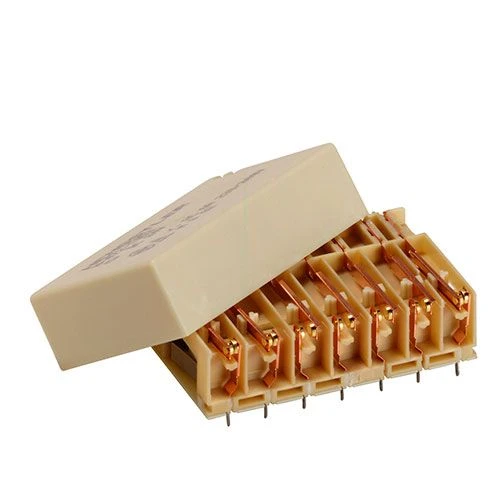
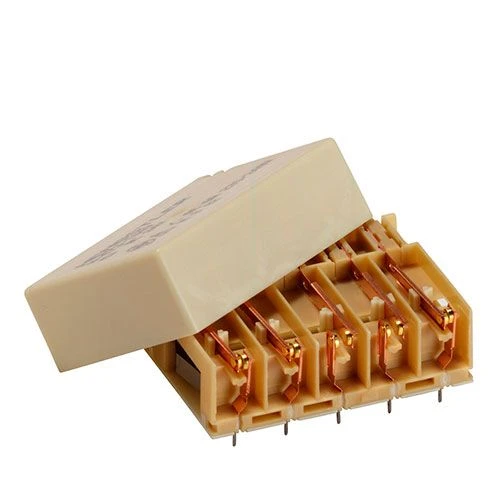
Equipment used in this area includes: signalling and interface relays with a large number of contacts, protection for 48 V DC and 230 V AC circuits, surge protection devices for power, signalling and data circuits, power supplies and uninterruptible power supplies, solid-state relays with circuit monitoring for signals, 19-inch cabinets and enclosures with enhanced EMC performance, fibre-optic boxes, terminal blocks and marking systems.