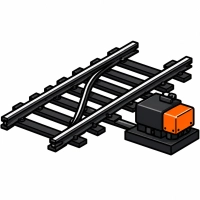
A point machine moves the switch blades and - more importantly - proves their position. Inside the drive housing are a motor with gearbox, blade detection and locking mechanisms, and detection rods whose status is transmitted to the signal box; a trailable point machine holds the blade with a force of up to 80 kN, while a non-trailable unit can provide 250 kN. High-speed turnouts with radii of around 1200 m use several drives operating in parallel and movable crossing noses with their own drives. Every point machine must also be capable of manual operation by crank, and the control-panel switch must be held for at least 2 seconds.
A turnout is installed outdoors in the track, subjected to loads from passing trains and the full range of weather conditions. In winter the switch blades can freeze - therefore turnouts use electric resistance heating supplied from LPN auxiliary-power points and switched cyclically. The point circuit is electrically insulated (including an insulated stretcher bar), while point-machine current is monitored by an ammeter on the signal-box control panel - the current reading shows whether the drive is operating.
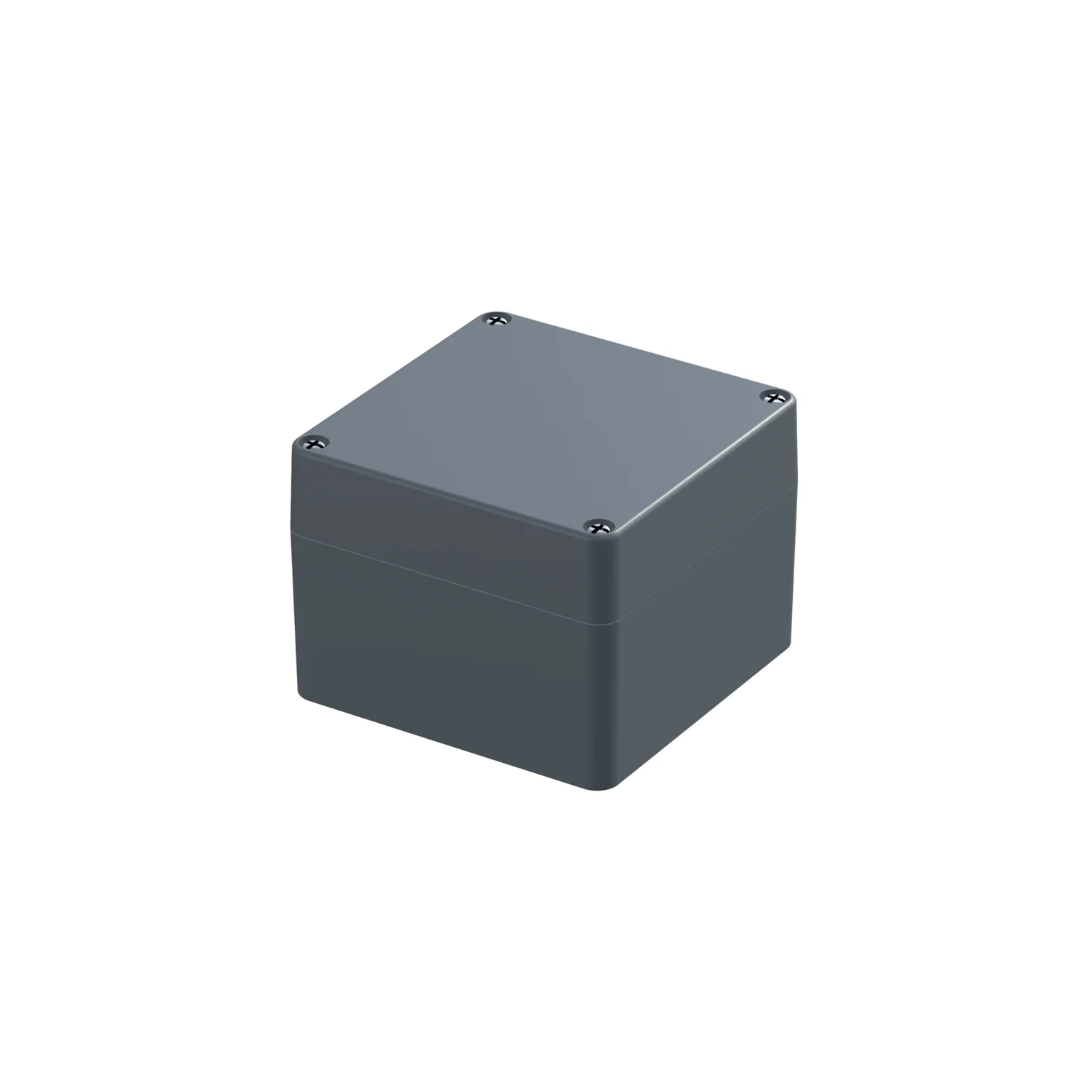
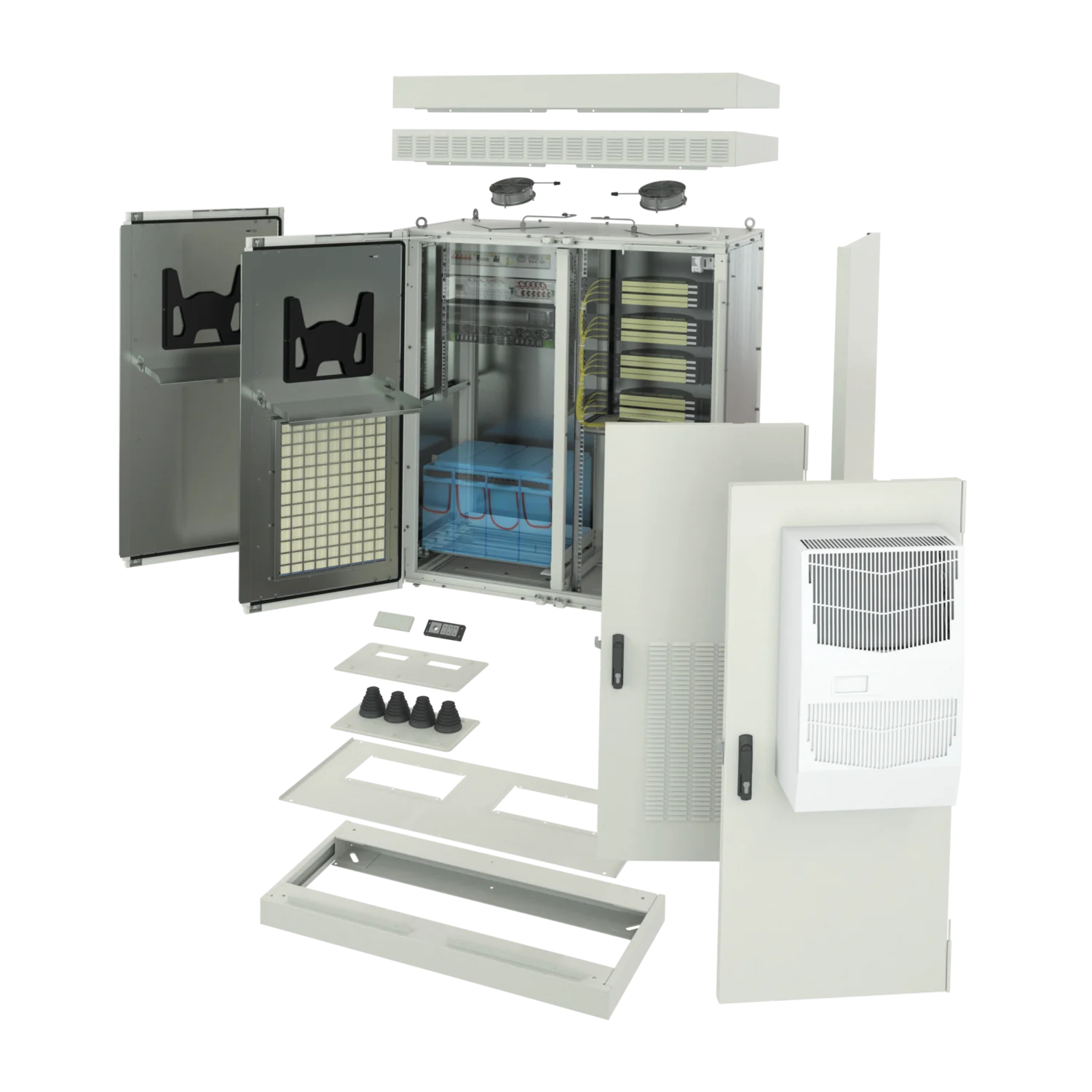
Equipment used in this area includes: absolute encoders for monitoring point-machine and movable-crossing positions, signalling relays for switch-blade detection, reversing solid-state relays for drive motors and relays for heaters with load monitoring, point-machine current transducers, surge protection devices for control and detection circuits, terminal blocks, fibre-optic boxes and rugged outdoor enclosures.