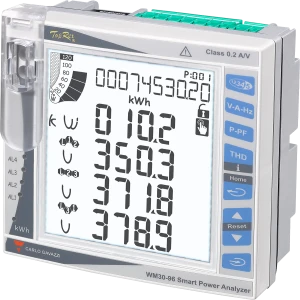
A passenger station is an infrastructure facility whose equipment is closer to that of a public building than a traction substation, yet it is supplied from the same non-traction auxiliary power line and operates within the influence of the 3 kV DC traction system. Platforms are equipped with LED, flap-type and LCD information displays with train-departure sensors, loudspeakers and class-D amplifiers on 30/100 V lines, slave clocks controlled from a master clock, cameras, ticket machines, assistance-call buttons and signalling for passengers with reduced mobility.
A separate group consists of platform and workshop external-power points: new vehicles must support an external 3×400 V supply through a standardized six-contact socket, including pilot contacts, as well as 230 V AC and 24 V DC. A supply point on a platform or in a depot must withstand the inrush current of vehicle converters and operate outdoors, with protection and connection-status monitoring. All platform equipment is accessible to the public, operates around the clock without local supervision and is exposed to interference from the traction system.
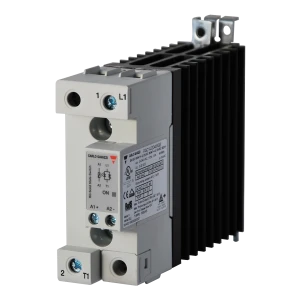
Equipment used in this area includes: vandal-resistant pushbuttons and switches, emergency-stop switches, information indicators, ticket and receipt printers, power supplies, uninterruptible power supplies and buffer modules for displays and public-address systems, surge protection devices for power and data lines, circuit protection, fibre-optic boxes, terminal blocks, enclosures and outdoor cabinets.